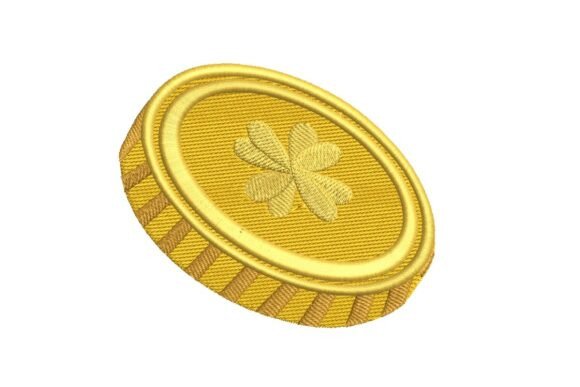
Review: Lucky Four-Leaf Clover Gold Coin Embroidery
As a designer who has spent countless hours digitizing and testing machine embroidery design files, I have learned that not every cheerful graphic translates well to thread. When I first loaded the Lucky Four-Leaf Clover Gold Coin Embroidery into my software, I was immediately struck by its clean isolation on a white background. It promises a shiny, festive aesthetic that feels perfectly timed for seasonal crafting. However, visual appeal in a preview image is only half the battle. The real test lies in how those digital vectors translate into physical stitches on actual fabric.
First Impressions and Visual Personality
The design centers on a classic symbol of good fortune: a gold coin stamped with a four-leaf clover. This combination creates an instant emotional connection, evoking feelings of luck, wealth, and celebration. For St Patrick S Day projects, this is a staple motif, but the execution here feels more refined than the typical clip-art style often found in budget bundles. The layout is balanced, with the clover taking center stage within the circular boundary of the coin.
From a technical standpoint, the "shiny" effect mentioned in the description relies heavily on how you manage your thread colors. In a digital mockup, gradients look smooth. In embroidery, shine comes from the interplay of light on satin columns and fill patterns. This design appears to lean on a mix of satin stitch for the outlines and potentially fill stitch for the body of the coin. If the digitizer has used varying angles in the fill, the result will be a dynamic, metallic sheen that catches the eye without looking flat.
Real-World Application: The Tote Bag Test
To truly evaluate this file, I imagined a specific client project: a custom canvas tote bag for a local boutique’s spring promotion. The goal was to create a handmade product that felt premium yet playful. I placed the Lucky Four-Leaf Clover Gold Coin Embroidery on the lower right corner of a natural cotton canvas.
The result was promising. Because the design is isolated, it does not require a complex background, which keeps the stitch density manageable. On a sturdy fabric like canvas, the coin held its shape well. The gold threads popped against the neutral background, creating a high-contrast look that customers love. This makes it an excellent candidate for tote bag design or even embroidered patch creation, where clarity is key. For Etsy seller accounts looking to refresh their small shop product lineup, this type of versatile, single-element design is invaluable because it scales well across different items.
Versatility Across Product Lines
Beyond totes, I considered how this embroidery file would perform on other popular items. For sweatshirt embroidery, the design needs to be large enough to show detail but not so dense that it stiffens the fabric. A medium-sized hoop placement on the left chest works beautifully here. The cheerful nature of the clover makes it suitable for baby embroidery on onesies, provided you use soft, skin-friendly threads and ensure the backing is trimmed neatly to prevent irritation.
It also serves as a strong accent for holiday embroidery beyond just March. The concept of "luck" and "gold" translates well to wedding gifts, graduation presents, or new business openings. As a personalized gift, it can be paired with initials or dates, though the current design is standalone. If you are selling digital embroidery file assets, offering this as part of a bundle with text options could increase its commercial value.
Technical Considerations and Fabric Choices
While the design is charming, there are areas where caution is necessary. The "shiny" effect depends on thread choice. Polyester threads offer durability and sheen, while rayon provides a softer luster but is less durable for items that undergo frequent washing. For a finished product like a kitchen towel or apron, I would recommend high-quality polyester to maintain the gold vibrancy after multiple wash cycles.
Fabric texture plays a crucial role. On smooth cotton or linen, the details of the clover leaves will be crisp. However, on textured fabrics like fleece or terry cloth, the finer details might get lost. In such cases, using a cut-away stabilizer is non-negotiable to prevent puckering. For stretchy fabrics used in custom apparel, such as performance tees, you must ensure the hoop size is appropriate and that the stabilizer can handle the tension without distorting the circular shape of the coin.
Dark fabrics present another challenge. Gold thread on black fabric looks stunning, but if the design includes thin outlines, they may disappear. I always advise running a test stitch on scrap fabric first. Check the contrast between your thread and fabric. If the design relies on subtle shading, it might not read well on dark backgrounds unless you adjust the thread palette to include lighter highlights.
Commercial Viability and Brand Consistency
For creative entrepreneurs, the legal aspect is as important as the aesthetic. Before using Lucky Four-Leaf Clover Gold Coin Embroidery in commercial embroidery projects, verify the license terms. Some designers allow unlimited physical sales but restrict the resale of the digital file itself. Always confirm whether the design assets are cleared for commercial use to protect your craft business.
From a branding perspective, this design exudes professionalism. It avoids the cluttered look of overly complex designs, making it easier to integrate into a cohesive brand identity. Whether used for printable mockup previews on your online store or stitched onto actual merchandise, it conveys quality. Customers associate clean, well-executed embroidery with higher value, which can justify a higher price point for your personalized gift offerings.
Final Designer Notes
Before committing to a full production run, take these practical steps:
- Test on Scrap Fabric: Always stitch out the design on the same material you plan to use for the final product to check for puckering or thread breaks.
- Check Stitch Density: Ensure the fill areas are not too dense for lightweight fabrics, which can cause tearing or stiffness.
- Review Thread Colors: Simulate the design in black and white to ensure the contrast holds up even without color.
- Confirm Hoop Size: Make sure the design fits comfortably within your machine’s hoop, leaving room for stabilization.
- Inspect Small Details: Zoom in on the clover leaves to ensure the running stitch or satin columns are tight enough to prevent gaps.
In conclusion, the Lucky Four-Leaf Clover Gold Coin Embroidery is a solid addition to any designer’s library. It balances festive charm with technical simplicity, making it accessible for hobbyists and reliable for professionals. With careful attention to thread selection and stabilizer choice, it can elevate a wide range of products from simple tote bags to high-end boutique apparel. It is a reminder that sometimes, the simplest symbols, when executed with precision, carry the most weight.